
 By Admin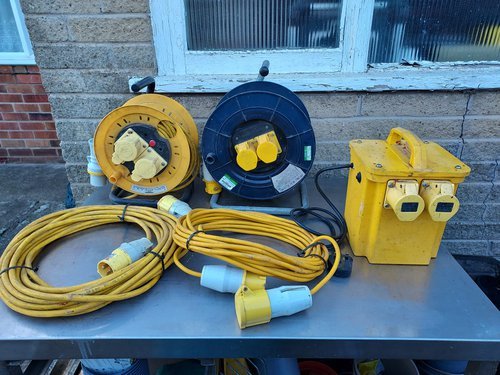
110V site transformers, cable reels, extension leads, and site lighting provide safe, compliant temporary power on construction and industrial sites, reducing electric shock risk and ensuring reliable power for tools and lighting.
Introduction to 110V Site Power Systems
Temporary power on construction sites prioritises safety and compliance. In the UK, 110V systems are the standard because they significantly reduce the risk of electric shock compared to 230V supplies.
A complete 110V site setup typically includes:
- 110V Site Transformers – to step down voltage
- 110V Cable Reels – for flexible power distribution
- 110V Extension Leads – to extend reach safely
- 110V Site Lighting – for visibility and productivity
Together, these components create a compliant and efficient site power solution.
What Are 110V Site Transformers?
Overview
A 110V site transformer converts standard 230V mains electricity into 110V centre-tapped to earth (55-0-55V), which is much safer for construction and industrial use.
Key Benefits
- Reduced risk of fatal electric shock
- Mandatory on many UK construction sites
- Robust, weather-resistant designs
- Suitable for tools, lighting, and temporary cabins
Common Types
- Portable site transformers
- Tool transformers
- Distribution transformers
- Weatherproof outdoor transformers
Typical Use Cases
- Powering 110V power tools
- Feeding cable reels and extension leads
- Supplying site lighting systems
110V Cable Reels: Safe Power Distribution
What Is a 110V Cable Reel?
A 110V cable reel is a portable extension solution that allows multiple tools or lights to be powered from a single transformer safely.
Key Features
- Heavy-duty cable insulation
- Integrated thermal cut-out protection
- Tough drum housing for site conditions
- Yellow cable for high visibility
Why Cable Reels Matter
- Prevent cable damage and tangling
- Reduce trip hazards
- Allow controlled power distribution across the site
Best Practices
- Fully unwind cable reels to prevent overheating
- Use IP-rated reels for outdoor use
- Match reel amperage to transformer capacity
110V Extension Leads: Flexibility on Site
What Are 110V Extension Leads?
110V extension leads extend power from transformers or cable reels to tools and equipment where fixed sockets are impractical.
Key Characteristics
- Industrial-grade connectors
- Heavy-duty rubber or PVC cables
- Various lengths (5m, 10m, 20m, 25m+)
- Impact and abrasion resistant
Where They’re Used
- Connecting power tools
- Temporary site offices
- Lighting towers and work lights
Safety Considerations
- Inspect regularly for damage
- Avoid overloading circuits
- Use correct IP ratings for wet conditions
110V Site Lighting: Visibility & Safety
Why 110V Site Lighting Is Essential
Poor lighting increases accident risk and reduces productivity. 110V site lighting provides safe, reliable illumination for indoor and outdoor works.
Types of 110V Site Lighting
- LED site lights
- Festoon lighting
- Tripod work lights
- Temporary floodlights
- Tunnel and confined-space lighting
Advantages of 110V LED Site Lighting
- Low power consumption
- High lumen output
- Reduced heat generation
- Long lifespan
- Shock-resistant designs
Applications
- Night-time construction work
- Indoor refurbishments
- Warehouses and factories
- Infrastructure and roadworks
How These 110V Components Work Together
A compliant site power setup typically follows this flow:
230V mains → 110V Site Transformer → 110V Cable Reel → 110V Extension Leads → Tools & Site Lighting
This system ensures:
- Voltage reduction
- Safe power distribution
- Scalability for large sites
- Compliance with health and safety regulations
Compliance, Standards & Safety
Relevant Standards
- BS EN 61558 (Transformers)
- BS 7671 (IET Wiring Regulations)
- HSE Construction Site Safety Guidance
Why 110V Is Preferred
- Centre-tapped earth reduces voltage to 55V
- Lower shock severity compared to 230V
- Widely accepted by site inspectors and insurers
Buying Guide: Choosing the Right 110V Equipment
Consider These Factors
- Power requirements (kVA rating)
- Cable length and load capacity
- IP rating (IP44 / IP65)
- LED vs halogen lighting
- Portability vs fixed installation
Expert Tip
Always size transformers above your expected load to avoid overheating and voltage drop.
FAQs About 110V Site Equipment
Why do construction sites use 110V instead of 230V?
110V systems significantly reduce the risk of fatal electric shock, making them safer for harsh site environments.
Can I use 110V tools at home?
Only if you use a suitable 110V transformer. Direct connection to 230V will damage the equipment.
Are 110V cable reels safer than extension leads?
Both are safe when used correctly, but cable reels offer better cable management and overload protection.
Is LED site lighting better than halogen?
Yes. LED site lighting is more energy-efficient, brighter, cooler, and longer-lasting.
Do I need weatherproof equipment outdoors?
Yes. Always use equipment with appropriate IP ratings for outdoor or wet conditions.
Conclusion
110V site transformers, 110V cable reels, 110V extension leads, and 110V site lighting form the backbone of safe temporary power systems on construction sites. When selected and installed correctly, they ensure compliance, protect workers, and maintain productivity in demanding environments.